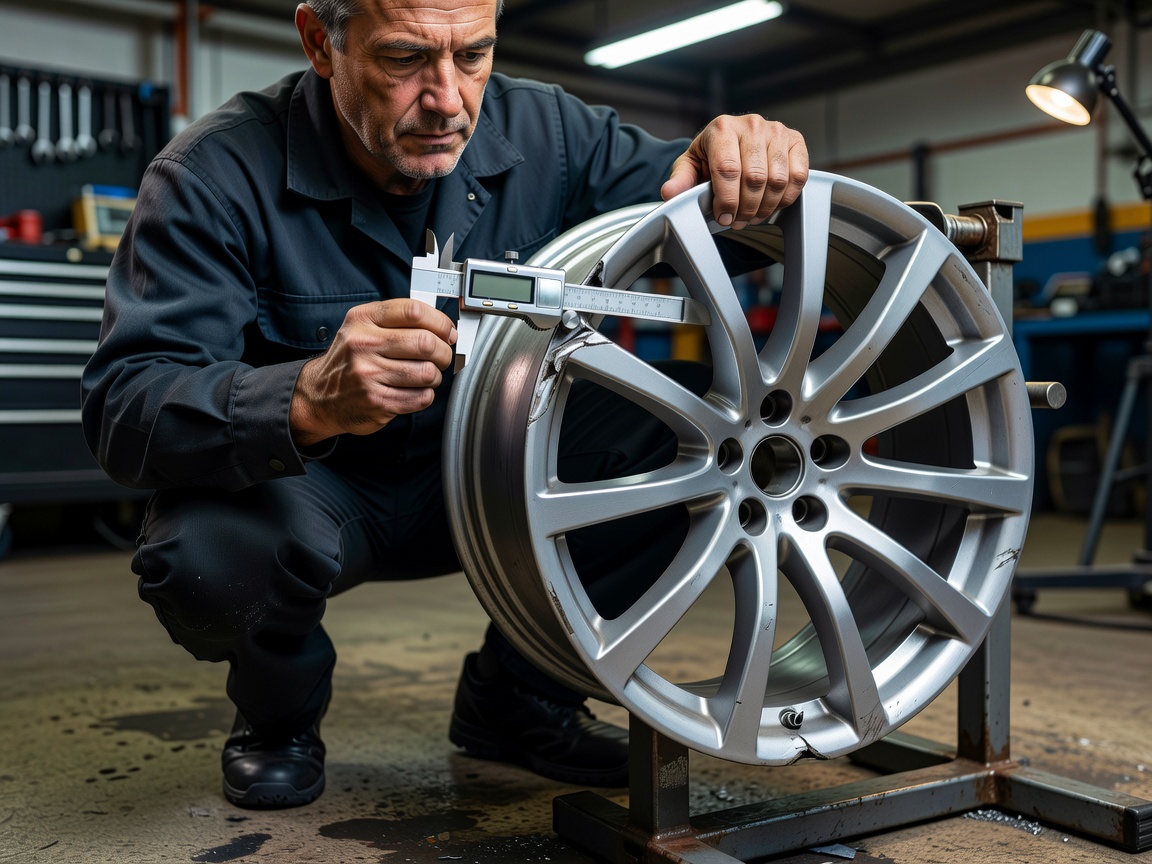
Overview
Alloy wheels are exposed to kerbs, road debris, water, brake dust and seasonal contaminants. A useful inspection records the current surface condition before cleaning, sanding or coating changes the evidence. The review should identify the wheel construction, existing finish, visible damage and any reason to pause cosmetic work.
Typical workflow
- Identify wheel type, finish and any visible previous repairs.
- Clean enough of the surface to distinguish dirt from corrosion or coating failure.
- Record kerb marks, bubbling, peeling, staining, cracks or deformation indicators.
- Separate cosmetic observations from potentially structural concerns.
- Document findings and confirm whether further professional assessment is needed.
Inspection points
Check the outer rim, spoke edges, face, bead area where accessible and rear surfaces. Look for corrosion beneath the finish, impact marks, uneven repairs and signs of air-loss-related damage. A crack, bend, distortion or damage near a load-bearing area should not be treated as a cosmetic defect.
Materials and process considerations
Existing powder coat, wet paint, diamond-cut surfaces and clear coats respond differently to preparation. The same visual symptom can have different causes. Finish matching also depends on lighting, substrate condition and adjacent undamaged areas.
Common problems
Brake dust can conceal pitting. Kerb damage may expose bare alloy. Repaired areas can have different profiles or coating thicknesses. Photographs are useful for initial discussion, but they cannot diagnose structural safety.
Advantages and limitations
A documented inspection reduces unsuitable process choices and creates a reference for later quality control. It cannot replace a physical assessment where impact, cracking, deformation or air retention may be involved.
Preparation checklist
- Remove loose dirt before detailed photographs.
- Provide wheel size and finish information if known.
- Note recent impacts, vibration, air loss or previous repairs.
- Do not grind or fill suspected structural damage before assessment.
Questions to confirm before work
Ask which areas are cosmetic, which require further inspection, how the existing finish will be treated and what finish options are compatible with the wheel. Confirm that no safety conclusion is being made from images alone.
Related services
Repair and preparation follows a suitable inspection. Refinishing and coating covers finish selection. Contact the operation with the wheel details.