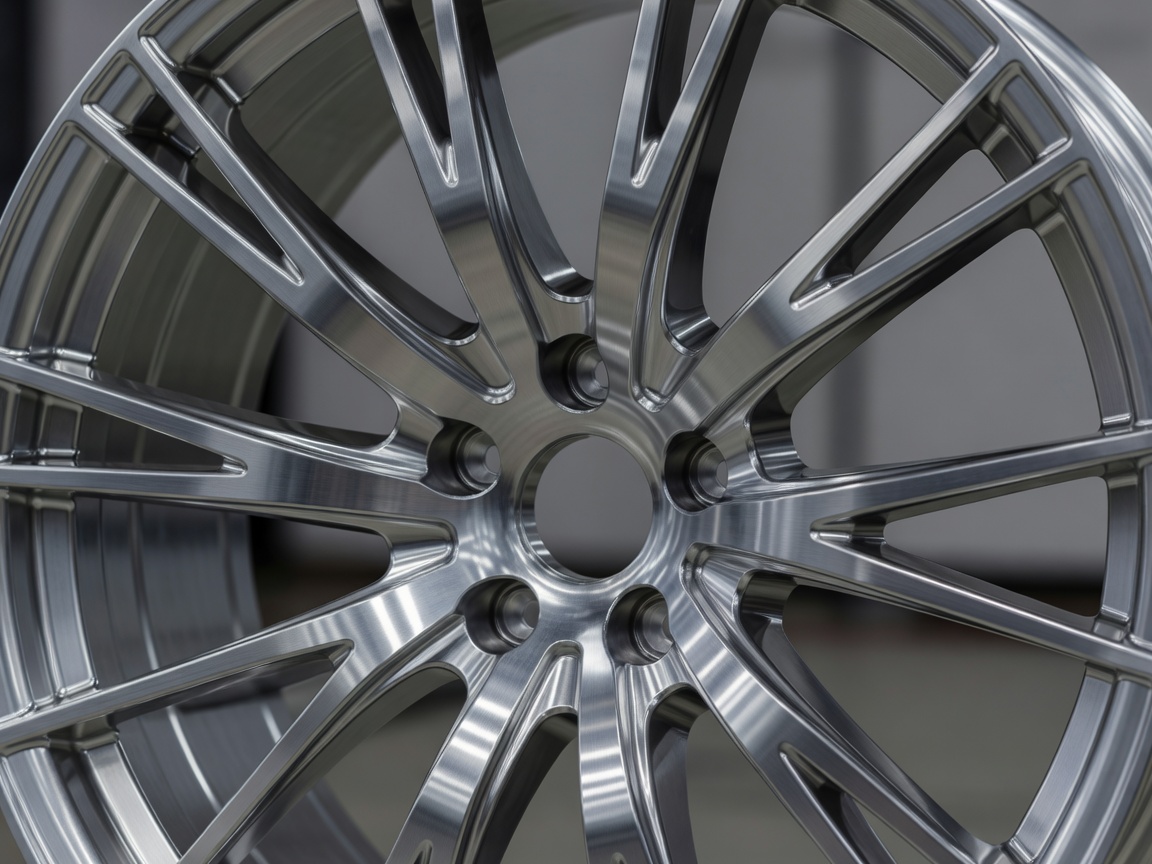
Overview
A diamond-cut wheel typically combines a painted base with a machined face that exposes a bright alloy surface. The face is then protected with a clear coat. Corrosion beneath or around that clear coat can spread and may become visible as lifting or cloudy patches.
Typical workflow
- Inspect the face, recesses, edges and existing clear coat.
- Record corrosion, kerb marks, previous cuts and any deformation indicators.
- Prepare the wheel and determine whether machining is suitable.
- Use lathe or CNC-style machining considerations to recreate the face where appropriate.
- Apply a compatible protective clear coat.
- Check face consistency, transitions, coverage and finish matching.
Inspection points
Look for damage crossing the machined face, corrosion beneath the clear coat, uneven previous cuts and changes between spokes. The face must be considered alongside the wheel’s construction and remaining material. Exact machining depths and manufacturer limits vary and should not be invented or assumed.
Depth and repeated refurbishment
Machining removes material from the face. Repeated refurbishment can reduce the available margin for another cut. A suitable decision therefore requires assessment of the existing profile and previous work. If the face cannot be responsibly recreated, an alternative finish may need discussion.
Clear coating and corrosion
The bright machined surface requires protection. Clear coat compatibility, edge coverage and preparation influence how the finish performs. Moisture and contamination beneath a failing coating can support further corrosion. Future care should avoid allowing brake dust and road salt to remain on the surface.
Common problems
Deep kerb damage, widespread corrosion, mismatched spoke faces and excessive prior machining can limit the route. A painted finish may be more appropriate than another machined finish, but that decision depends on assessment.
Advantages and limitations
A machined face can restore the contrast between bright spokes and darker recesses. It is more process-specific than a full painted finish and may have greater sensitivity to clear-coat failure and repeated cutting.
Preparation checklist
- Provide photographs of the entire face and close damage views.
- Note any previous diamond-cut work.
- Record corrosion, kerb impacts and clear-coat lifting.
- Ask whether an alternative painted finish should be considered.
Questions to confirm before work
Ask whether the face is suitable for machining, how previous cuts will be considered, how the clear coat will be selected and how finish matching will be checked. Do not rely on a generic depth claim.
Related services
Start with inspection and review preparation. Compare alternatives in refinishing and coating. Contact with wheel details.