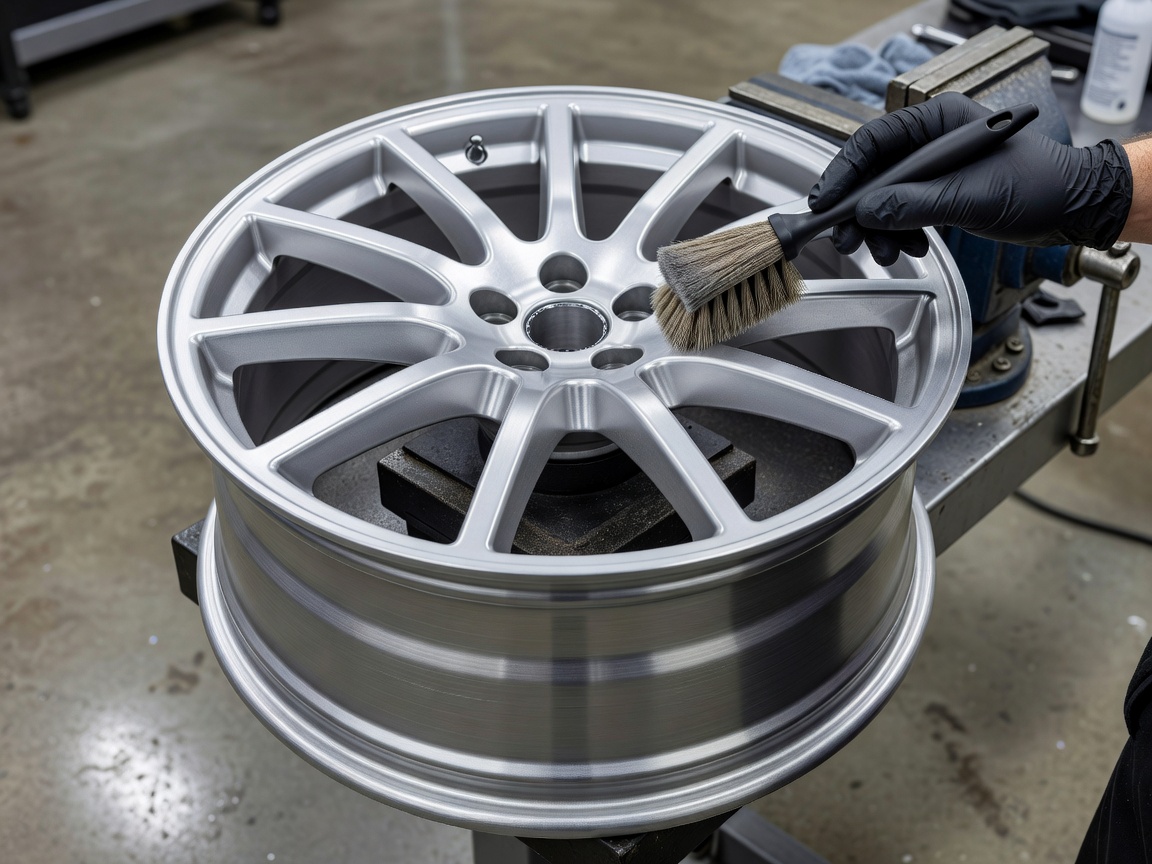
Overview
Painted, powder-coated and diamond-cut wheels have different surface characteristics. The basic maintenance principle is simple: remove contamination regularly, use products suitable for the finish and inspect early signs of corrosion or coating failure.
Typical workflow
- Allow the wheel to cool before cleaning.
- Rinse loose grit away before contact washing.
- Use a finish-appropriate cleaner and soft tools.
- Work into spokes, recesses and the inner rim without forcing grit across the surface.
- Rinse thoroughly and dry with a clean material.
- Inspect for chips, bubbling, staining or clear-coat damage.
Cleaning and product selection
Product instructions matter. Avoid assuming that a strong chemical or abrasive tool is suitable for every coating. If the finish is new, damaged or unknown, confirm compatible care guidance before use. Do not allow cleaner to dry on a hot surface.
Brake dust and corrosion
Brake dust can combine with moisture and become difficult to remove. Regular cleaning reduces accumulation but does not guarantee prevention of corrosion. Bubbling, lifting or cloudy areas may indicate a coating problem and should be assessed rather than scrubbed aggressively.
Finish-specific maintenance
Diamond-cut faces need attention to clear-coat condition because exposed machined areas rely on that layer for protection. Painted and powder-coated surfaces should be checked around edges, spoke corners and repaired areas. A protective product may be considered only when it is compatible with the finish.
Seasonal care
Road salt and standing moisture increase the need for inspection during colder or wetter periods. After driving in heavily contaminated conditions, rinse the wheels when practical. Avoid storing a wet wheel under contamination.
Advantages and limitations
Consistent care helps identify defects early and limits avoidable contamination. It cannot restore failed coating or reverse corrosion. Professional refinishing may be required when the finish has lifted, pitted or lost adhesion.
Preparation checklist
- Identify whether the wheel is painted, powder-coated or diamond-cut.
- Read the cleaner and protection product instructions.
- Use separate clean tools for wheels.
- Inspect after cleaning rather than judging condition through brake dust.
Questions to confirm before work
Ask which finish is present, which products are compatible and whether any visible change indicates corrosion or clear-coat failure. Confirm whether a professional inspection is needed before further cleaning.
Related services
See inspection for condition review, refinishing for finish options and contact for a project discussion.