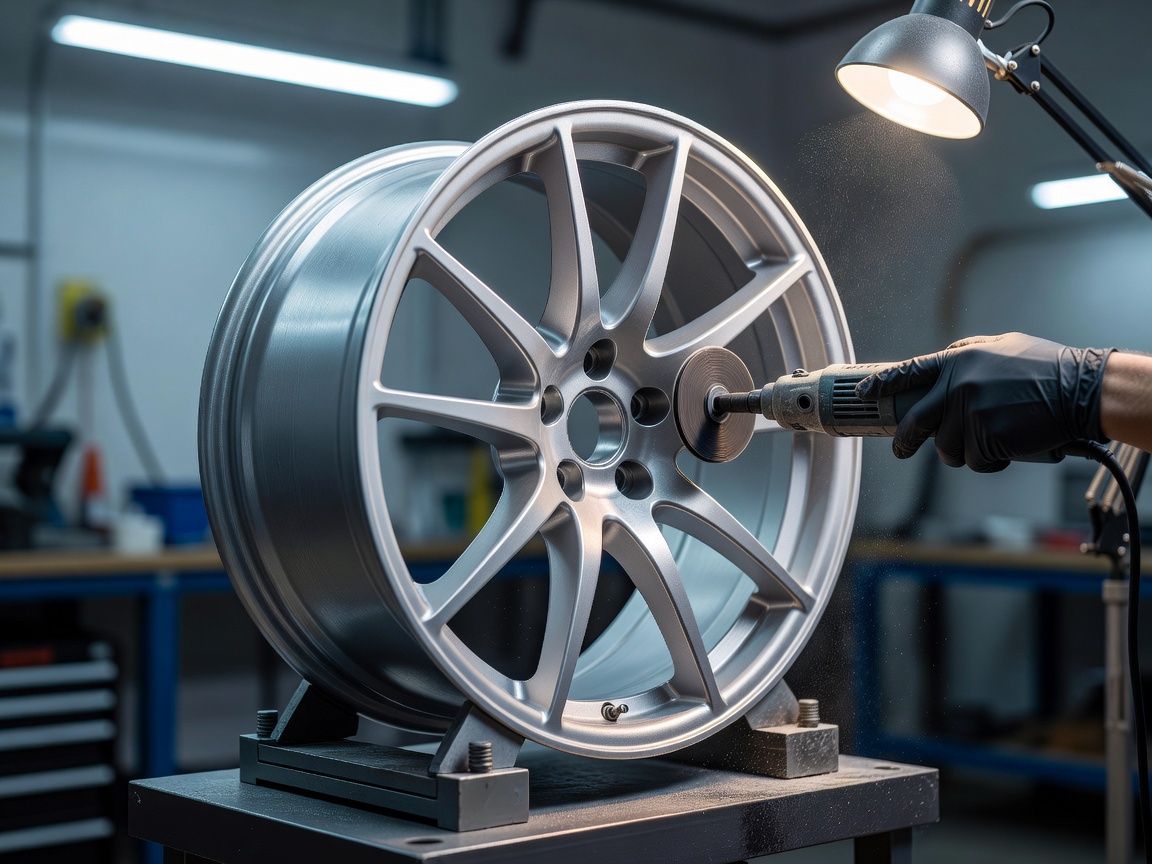
Overview
Kerb marks, paint loss and surface corrosion are common refurbishment inputs. Preparation may include cleaning, removal of failed finish, abrasion, corrosion treatment, local cosmetic correction and masking. The chosen sequence depends on the wheel material, existing coatings and inspection findings.
Typical workflow
- Inspect and photograph the wheel before work.
- Clean the wheel and remove contamination that could mask damage.
- Remove loose or unsuitable coating and abrade the repair area.
- Address cosmetic profile defects with a compatible preparation method.
- Mask valve areas, mating surfaces and other zones that must remain clear.
- Complete a pre-finish check for residue, sharp edges and inconsistent preparation.
Inspection points
Kerb damage is often cosmetic at the outer lip, but impact damage can extend beyond the visible mark. Bubbling paint may indicate corrosion under the coating. Cracks, significant bends, deformation or damage around structural areas require professional assessment and should not be concealed by filler or coating.
Materials and process considerations
Cleaning media, abrasives, fillers, primers and masking materials must be compatible with the selected finish. Aluminium surfaces require careful preparation because contamination and oxidation can affect adhesion. A diamond-cut face requires a different route from a fully painted wheel.
Common problems
Insufficient cleaning leaves brake dust in recesses. Over-aggressive abrasion can alter profiles. Poor masking can leave coating on mating areas. Rushing between preparation stages can trap residue beneath the finish.
Advantages and limitations
Controlled preparation gives the coating a more consistent substrate and makes finish defects easier to prevent. It cannot correct a wheel that has structural damage, and cosmetic methods should never be presented as a repair for a crack or serious deformation.
Preparation checklist
- Record impact history and any vibration or air-loss symptoms.
- Identify the existing finish and any previous repair.
- Confirm whether tyres, valves and weights remain fitted.
- Mark areas that must not receive coating.
Questions to confirm before work
Confirm how kerb damage will be classified, which areas need further inspection, how old coating will be removed and how masking will protect mating surfaces. Ask which preparation route is suitable for the chosen finish.
Related services
Begin with wheel inspection, then review refinishing and coating. For a machined face, see diamond-cut refurbishment. Contact for a project discussion.